Active Termites or Prevention? What Central Florida Homeowners Should Know
Treating termites you already have and keeping them out are two different jobs, and knowing which one you need saves money and worry.
October 20, 2026 · 4 min read
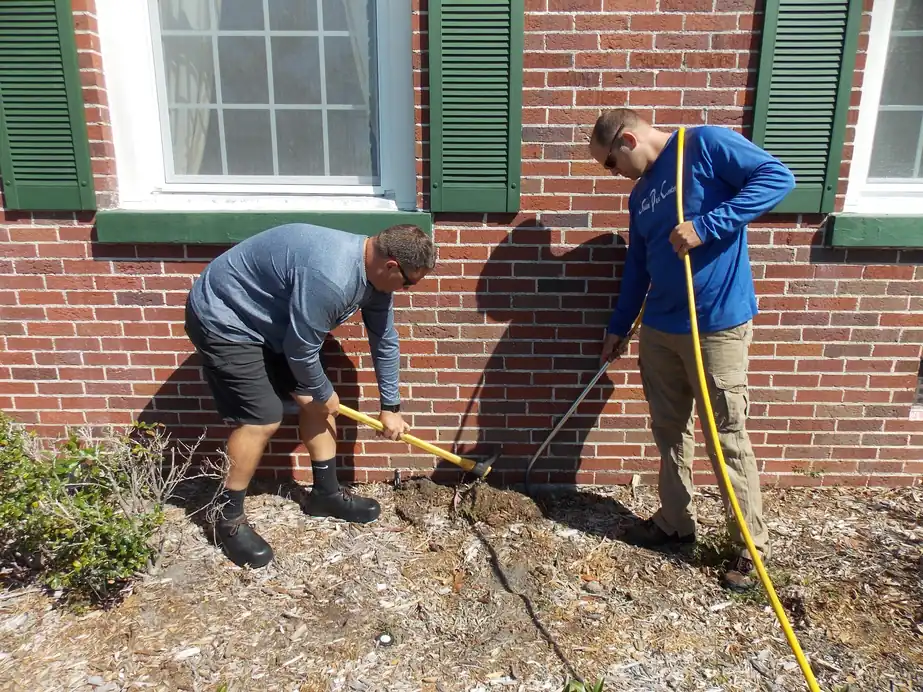
Termites can be a major problem here in Central Florida. That isn't a scare tactic, just the nature of the place. Warm weather, damp soil and wood-framed houses give termites everything they want. Most people never see one until something goes wrong, so it pays to understand your options before you need them.
Brian Pest Control splits its termite work into two jobs: post-construction treatments for active issues, and a preventative liquid application. They sound close, but they answer different questions. One is about what to do with termites you already have. The other is about keeping them from getting in at all.
Why termites go unnoticed
Termites work out of sight. Subterranean termites live in the soil and travel to a house through the ground, often building thin mud tubes along a foundation wall or slab edge so they stay out of the open air. Once inside, they eat wood from within and can leave a thin outer shell that looks perfectly normal.
Here are the signs worth knowing:
- Mud tubes about the width of a pencil on foundation walls, piers or inside the garage.
- Discarded wings near windowsills or door frames after a swarm, which often happens in spring.
- Wood that sounds hollow when you tap it, or paint that bubbles or ripples for no clear reason.
- Doors and windows that suddenly stick when the weather hasn't changed.
- Tiny pellets that look like coarse sand or sawdust, which can point to drywood termites.
None of these proves you have termites. Humidity swells a door all by itself, and paint bubbles for plenty of other reasons. But any one of them is a good reason to have someone take a proper look.
Treating an active problem
If termites are already in or around your home, you're looking at a post-construction treatment. The name just means the house is already built, so the treatment has to go in around a structure that's standing, not into open ground before the slab is poured.
In general terms, treating an active problem means working out where the termites are getting in, then putting treatment where they travel: in the soil along the foundation, and at trouble spots like cracks, plumbing penetrations or wood that touches the ground. Every house is different. A slab home with brick veneer is a different puzzle from a raised house with a crawl space. That's why a walk around the property matters more than a one-size answer over the phone.
Brian Pest Control says it has over 26 years of termite experience behind it, and Brian himself has been in pest control since 1998. That's the kind of background you want when the question isn't just whether termites are there, but where they're coming from.
One honest note: treatment stops termites from feeding, but it doesn't repair what they've already eaten. Replacing damaged wood is a separate carpentry job, and the sooner a problem is caught, the less of that you're likely to need.
What a preventative liquid application does
Prevention is the other side of the coin. A preventative liquid application is a treatment applied to the soil around a home so that termites tunneling toward the house meet a treated zone instead of an open path to the wood. It's meant for homes with no active problem, and in Central Florida, where termite pressure is simply part of life, that describes most homes.
Think of it like a seatbelt, not a repair. You're not fixing anything that's wrong today. You're lowering the odds that something goes wrong later, at a point when the fix would cost a lot more.
Prevention makes particular sense if you've just bought a house, if you've never had a termite inspection, or if you have mulch beds, a wood fence or a woodpile pushed up against the foundation. Those are the spots termites find first.
What an annual termite treatment is for
Some customers keep termite protection on a yearly schedule. Michael Kravitz, who has lived in his Lakeland-area home for more than nine years, describes Brian Pest Control doing bi-monthly insect control, an annual termite treatment and seasonal lawn treatments for him.
The reason to repeat termite work is that protection in the soil doesn't last forever. Rain, irrigation, soil movement, new landscaping and construction all disturb the ground around a house. A yearly visit is a chance to have someone look the place over, refresh coverage where it's needed, and catch a problem while it's still small. What a yearly visit includes can vary from one company to the next, so ask exactly what yours covers.
Small things you can do between visits
- Keep mulch and soil a few inches below the siding or stucco line, so there's a visible gap along the wall.
- Fix leaking hose bibs, gutters and AC drain lines that keep soil damp against the house.
- Store firewood and spare lumber off the ground and away from the walls.
- Don't bury or stack wood scraps from remodel projects near the foundation.
- Tell your technician about any mud tube, swarm or soft wood you've seen, even if it seems minor.
That last one matters more than people think. A homeowner who spots a mud tube in the garage and mentions it gives the tech a head start that no inspection can match.
Not sure if termites are already working in your walls, or just want to keep them from starting? Call Brian Pest Control at (863) 370-0545 for a free estimate. Tell them what you've seen. A small clue is a lot easier to deal with than a surprise inside a wall.
Brian Pest Control, Inc, (863) 370-0545
Call (863) 370-0545More articles
Chinch Bugs or Drought? How to Read the Brown Patches in Your Lawn
Brown grass in the heat could be thirst or it could be insects, and the fix for each is completely different.
Why Year-Round Pest Control Beats Spraying Once
In Central Florida the pests never fully leave, and one treatment can't keep up with a problem that keeps coming back.