Chinch Bugs or Drought? How to Read the Brown Patches in Your Lawn
Brown grass in the heat could be thirst or it could be insects, and the fix for each is completely different.
October 20, 2026 · 4 min read
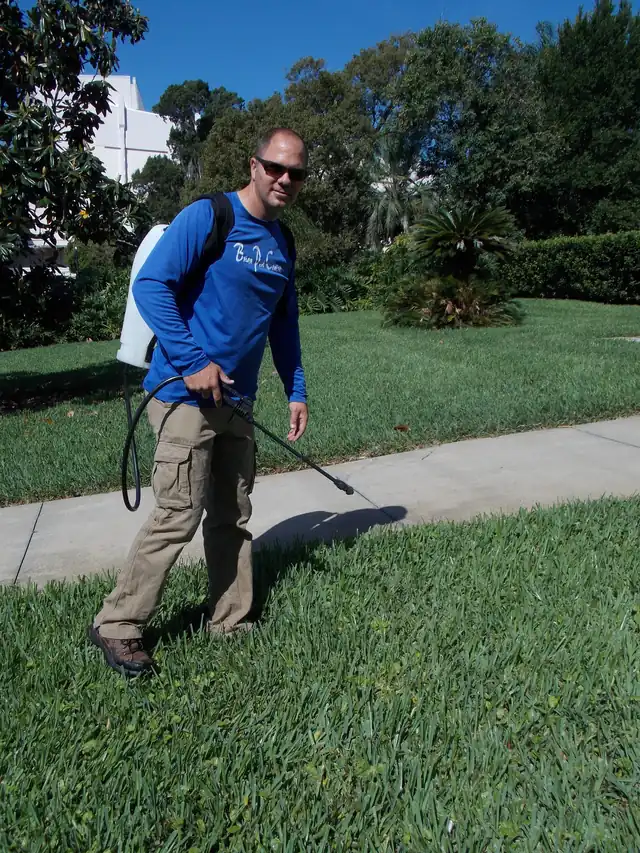
Every summer the same question comes up: my lawn is turning brown, so is it dry or is something eating it? In Central Florida the honest answer is sometimes both. Chinch bugs are a common lawn insect here, and the damage they cause looks a lot like a lawn that just needs water.
One Lakeland customer, Shawn C., wrote that Brian Pest Control took care of his lawn for chinch bugs and his house too. It's a good example of how often the two problems arrive together, and why it helps to know what you're looking at.
What chinch bugs are, and why they love hot weather
Chinch bugs are tiny, smaller than a grain of rice, dark with white wings folded over their backs. They feed by sucking the juices out of grass blades, and as they feed the blade yellows and then dies. They especially favor St. Augustine grass, which is common in Florida yards.
Heat is what brings them on. They do best in hot, sunny, dry spots, which is why the first damage often shows up along a driveway, a sidewalk or a sun-baked edge of the lawn where pavement throws heat back at the turf. In Florida, warm weather lasts a long time, so the risk window is long too.
How to tell chinch bugs from drought
These checks won't replace a professional look, but they'll tell you a lot before anyone arrives:
- The water test. Drought-stressed grass perks up within a few days of a good soak. Chinch bug damage keeps spreading no matter how much you water.
- Where it starts. Insect damage often begins in full sun next to pavement. Drought tends to show across the whole lawn or on high, fast-draining spots.
- The edge of the patch. At the border between dead and healthy grass you'll often find yellowing blades. That's where the bugs are feeding, because they move outward to fresh grass.
- The coffee can test. Cut both ends off a can, push it into the turf at the edge of a patch, and fill it with soapy water. Give it several minutes and watch for tiny bugs floating to the top.
Keep in mind that other problems can look the same. Fungus, a clogged sprinkler head or a dry zone your irrigation never reaches can all leave brown patches. If the tests above don't give you a clear answer, that's a good moment to ask someone who looks at Florida lawns every day.
Why catching it early matters
Chinch bug damage spreads outward, and a patch the size of a dinner plate this week can be the size of a driveway in a few more. Grass that has stopped growing but still has live roots can recover. Grass that has died completely cannot.
When sections are gone, the fix is replacing them with new sod. Brian Pest Control installs sod as part of its landscaping work, so that's a conversation you can have once the insects are under control. Laying new sod before the bugs are dealt with just feeds them a fresh meal.
What a lawn spraying program does
The company describes its lawn spraying program as using high quality products on your lawn to give you the best-looking lawn in the neighborhood, with a variety of programs to suit different needs. Customers describe the results in plain terms. K Edwards says she's used Brian Pest Control for lawn fertilization and pest control for a few years and is very satisfied. Nic Vescera says the team has taken care of his yard for over 15 years.
In general, the value of a program is timing. Visits are scheduled through the season, so weeds, feeding and insects are handled before they become visible damage, not after. You pay attention to your lawn on the weekends. A program means someone is paying attention to it in between.
It also helps to have a tech who explains the work. Michael Bell says his yard technician keeps him informed about what's being applied to the yard and always makes time to answer questions. If you ever wonder why your lawn is getting a particular treatment, ask. A good answer is part of the service.
Habits that help your lawn in the heat
- Water deeply and less often, early in the morning, instead of a light sprinkle every evening.
- Check that sprinkler heads actually reach the edges near pavement, where lawns dry out first.
- Mow at a steady, correct height for your grass type and don't scalp it in summer.
- Go easy on heavy nitrogen feeding in the heat, since soft, fast growth can attract insects.
- Walk the lawn once a week and look at the borders of any off-color patch.
If you've got a patch that isn't responding to water, or you'd simply like a lawn program set up before the next heat wave, call Brian Pest Control at (863) 370-0545 for a free estimate. Tell them where the patch started and how long it's been there. It helps them work out if it's bugs or just a thirsty yard.
Brian Pest Control, Inc, (863) 370-0545
Call (863) 370-0545More articles
Active Termites or Prevention? What Central Florida Homeowners Should Know
Treating termites you already have and keeping them out are two different jobs, and knowing which one you need saves money and worry.
Why Year-Round Pest Control Beats Spraying Once
In Central Florida the pests never fully leave, and one treatment can't keep up with a problem that keeps coming back.